What Size Water Tank Do You Need? 500 L to 2,000 L Explained for Bengaluru Homes
Quick answer: Start from 135 litres per person per day, so a family of four uses about 540 litres a day, then multiply by the days between refills. For four people that means a 750 L tank on daily supply, 1,500 L on alternate-day supply and 2,000 L with a 3-day buffer for tanker or borewell dependence. An independent house usually splits this into a sump of 1,500–2,000 L and an overhead tank of 750–1,000 L.
Ask ten plumbers what size tank a family needs and you get ten confident numbers. The honest answer is a short calculation, and it depends on one thing most people forget: not how much water you use, but how often it arrives.
Start with litres per person
The Bureau of Indian Standards benchmarks urban domestic use at 135 litres per person per day: drinking, cooking, bathing, flushing and cleaning together. Real households range from 100 to 200 depending on habits; a washing machine and a garden push it up, a couple that eats out pushes it down. For sizing, 135 is the right starting point.
So a family of four uses about 540 litres a day. That is not the tank size. It is the daily draw.
Then multiply by how long the tank must last
The tank has to hold enough water to cover the gap between refills. In Bengaluru that gap varies enormously:
- Daily Cauvery supply at reliable pressure: a one-day buffer is enough, with a little headroom.
- Alternate-day or fixed-hours supply, which is how many BWSSB areas actually receive water: you need two days' worth.
- Borewell or tanker dependence, common in the outer wards and the 110 villages brought into BBMP: plan for three days, because a late tanker or a dry pump is not a rare event.
The table
| Household | Daily use | Daily supply | Alternate days | 3-day buffer |
|---|---|---|---|---|
| 2 people | 270 L | 500 L | 750 L | 1,000 L |
| 3 people | 405 L | 500 L | 1,000 L | 1,500 L |
| 4 people | 540 L | 750 L | 1,500 L | 2,000 L |
| 5 people | 675 L | 1,000 L | 1,500 L | 2,000 L |
| 6 people | 810 L | 1,000 L | 2,000 L | 3,000 L |
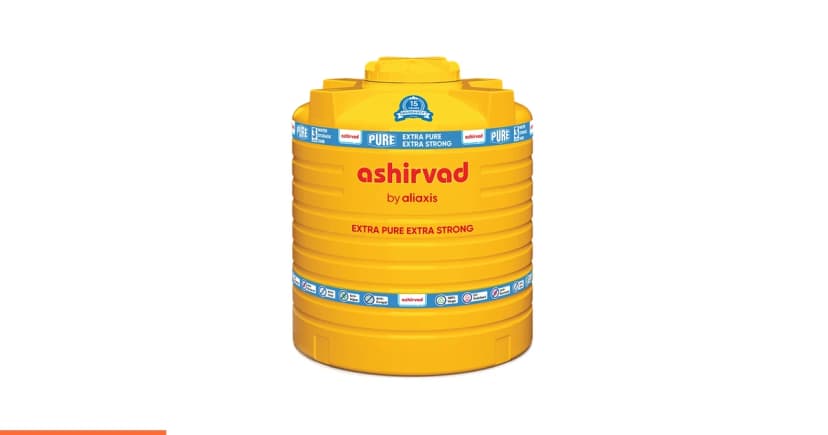
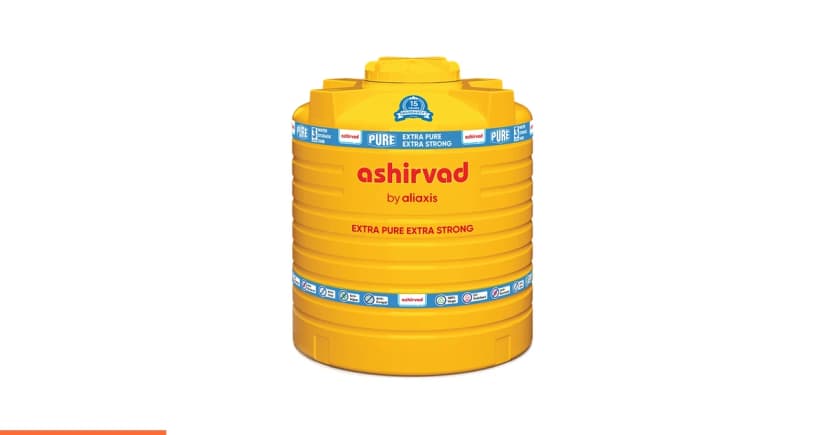
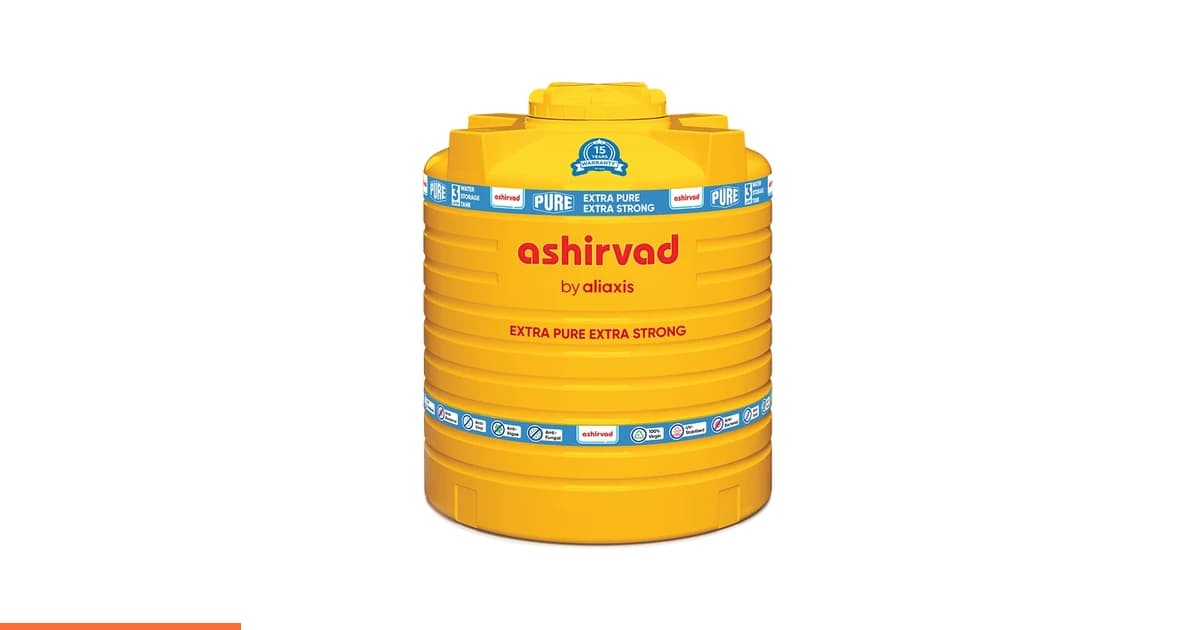
Each cell is the next standard tank size above the requirement, with a small margin. Add 10–20% if you run a washing machine daily or water a garden. The sizes are the ones Ashirvad makes (500, 700, 750, 1,000, 1,500, 2,000, 3,000 and up), and every one is on our water tank page with its price.
From our shop
Products in this guide
Live dealer prices. Add to cart, or ask for a GST quote on the whole list.
Overhead tank versus sump
An independent house in Bengaluru almost always runs two tanks: an underground sump that receives the supply (or the tanker) and an overhead tank that the pump fills and gravity drains into the taps. The sump is the buffer; the overhead tank only needs to hold a day, because the pump tops it up.
So for a four-person house on alternate-day supply: a sump of 1,500–2,000 L and an overhead tank of 750–1,000 L. The sump can be an RCC pit or a polymer underground tank such as Ashirvad's Aquafer, which goes in the same day the excavation is ready.
A flat with a building sump and pumped supply usually needs no tank of its own: the building's overhead tank does the work. Check what the association actually provides before buying.
What the terrace has to carry
Water weighs one kilogram per litre. A full 1,000 L tank is a tonne, plus the tank itself. A standard RCC roof slab carries this comfortably when the tank sits over a beam or a column junction; it does not like a tonne in the middle of a span. Anything above 2,000 L on a roof, or any tank on an older building, is a question for a structural engineer before it is a question for a plumber.
Height matters too. Every metre the tank sits above the top-floor shower adds pressure; a tank on a low stand on the same level as the bathroom gives a weak shower no matter how big it is.
One big tank or two smaller ones?
Two smaller tanks in parallel cost a little more per litre but let you clean one while the other keeps the house running, and if one develops a fault you are not dry. For a 2,000 L requirement, two 1,000 L tanks are worth considering: the price is nearly the same because Ashirvad's per-litre rate is flat across those sizes.
Sun, and whether to insulate
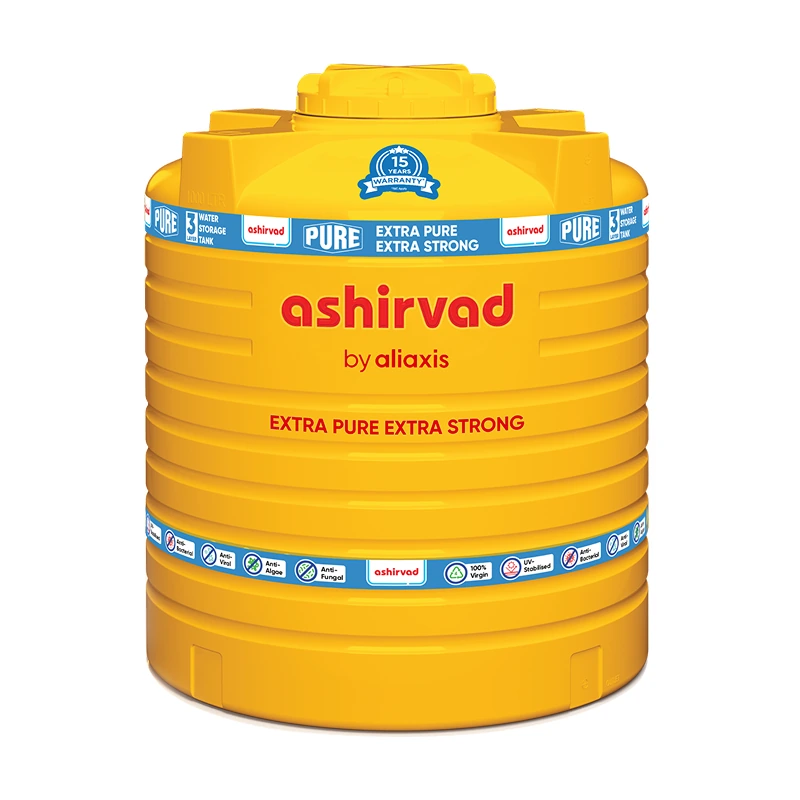
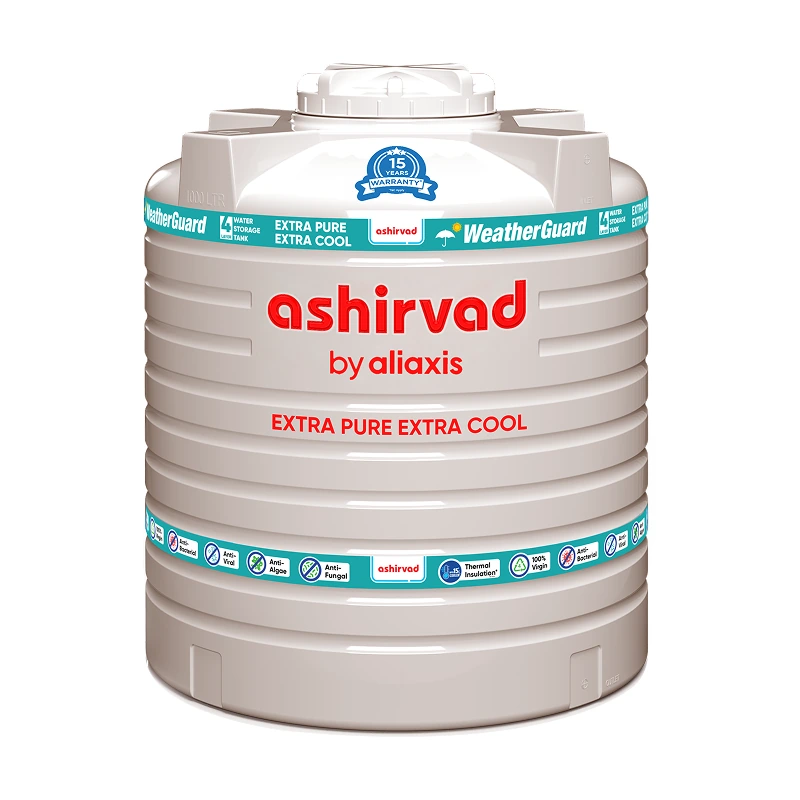
A tank in full afternoon sun delivers hot water from the cold tap by May. If the tank cannot be shaded, the 4-layer insulated tank is the fix; if it can be placed in shade or under a cover, the standard 3-layer is fine. Our price list post shows the difference is about 14%.
Quick answers
Is 1,000 litres enough for a family of four?
With daily supply, comfortably. With alternate-day supply, only if there is a sump underneath it. Without a sump on alternate-day supply, go to 1,500 L.
Is 500 litres enough for two people?
For daily supply, yes with a margin. For anything less reliable, 750 L.
How big a sump?
Two to three days of the household's use (1,500 to 2,000 L for a family of four), and always larger than the overhead tank it feeds.
Related: Ashirvad vs Sintex vs Supreme Water Tanks: Which to Buy.
AR Trading Company is an authorised Ashirvad dealer in Bengaluru. Every tank above is listed with its current price on our water tank page; ask for a GST quote on the tank plus the nipples, valves and pipe it needs, or talk to us.