Ashirvad Water Tanks in Bengaluru: Sizes, Layers and What the Fittings Cost

A water tank is one of the few things in a plumbing list that you buy once and then live with for fifteen years. At our Viveknagar counter the questions are always the same three. What size. How many layers. And what does it take to connect it to the house.
Here are the answers we give, with the connecting parts priced from our own catalogue and the specifications checked against what Ashirvad publishes.
What Ashirvad actually sells
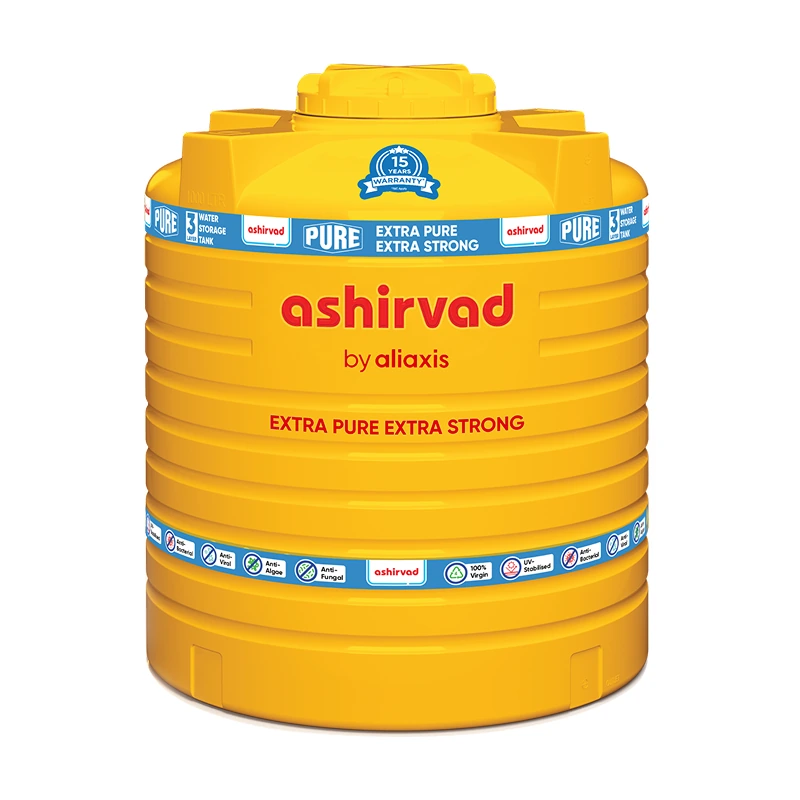
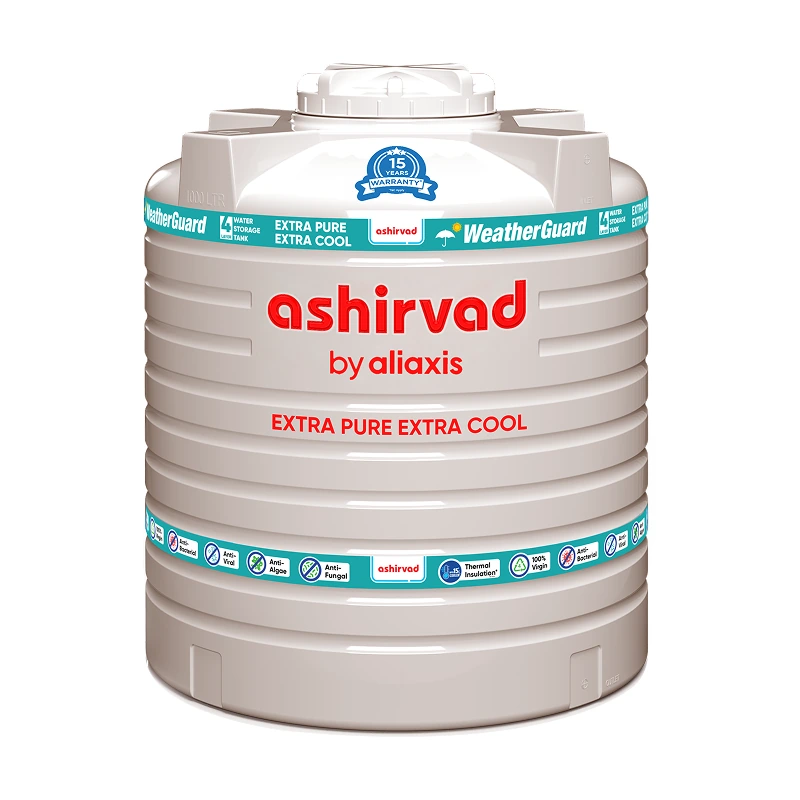
Ashirvad, now part of Aliaxis, sells storage tanks in two families. The Pure tank is built in three layers. The WeatherGuard tank is built in four, the extra one being a foam layer that insulates the water. Ashirvad states that the four layer tank keeps water cooler by 13 to 15 degrees when the outside temperature touches 45 degrees.
On capacities, Ashirvad's own page says the storage tank is available in four sizes: 500, 700, 1500 and 2000 litres. Stock at any dealer moves around, so confirm the capacity you want is available before you plan the slab.
Read the warranty before you buy, not after
This one is worth knowing. Two pages on Ashirvad's own website give two different warranty periods. The water tanks page says fifteen years. Their guide to water storage tanks says ten years along with a service network across more than 360 towns and cities.
We are not going to guess which is current. Ask for the warranty card at the time of delivery, read the period printed on it, and keep it with your invoice. The card is the document that counts if the tank fails in year eight, and a tank bought without one is a tank you cannot claim on.
What size tank for a Bengaluru home
Start from the design figure used in Indian water supply planning. The CPHEEO manual and the BIS code of basic requirements put domestic demand at 135 litres per person per day for towns with a sewerage system, and 150 litres per person per day for metro cities. Bengaluru sits in the second band.
So a family of four is planning around 600 litres a day. That is the number people get wrong, because they think of drinking water and forget that a washing machine cycle, two bathrooms and a kitchen make up almost all of it.
| Household | Daily need at 150 litres per person | What we usually see fitted |
|---|---|---|
| 2 people, apartment | 300 litres | 500 litre overhead tank |
| 4 people, independent house | 600 litres | 1000 litre overhead, plus sump |
| 6 people, two floors | 900 litres | 1500 or 2000 litre overhead, plus sump |
| Tanker dependent, any size | Add two days of buffer | Bigger sump rather than bigger roof tank |
That last row is the piece of advice worth the most. Water weighs a kilogram a litre, so a full 1000 litre tank puts a tonne on your roof slab, and a full 2000 litre tank puts two. If you need buffer because tankers are unreliable in your area, the place to add it is the sump at ground level, not the terrace. If you are extending an existing slab, ask the person who built it before you double the capacity up there.
From our shop
Products in this guide
Live dealer prices. Add to cart, or ask for a GST quote on the whole list.
What the layers do, and what they do not
The outer layer takes the sun. It is stabilised against ultraviolet light, which is the thing that makes cheap tanks go chalky and brittle after a few summers in this climate. The middle layer carries strength, and in the four layer tank it also insulates. The inner layer is the one that touches your water, and Ashirvad uses a nano silver treatment there that it says prevents bacterial growth on the inner surface.
Now the part nobody selling tanks will tell you. Layers do not keep a tank clean. Sunlight entering through a cracked or badly seated lid will grow algae inside the most expensive tank on the market. A tank still needs draining and scrubbing twice a year, and the lid needs to seal. Most of the green water we hear complaints about at the counter is a lid problem, not a tank problem.
What to check when the tank arrives
Polyethylene water tanks in India are covered by IS 12701, and ISI certification is mandatory for this product under a quality control order. The standard requires the manufacturer name or trademark and the net capacity in litres to be moulded onto the outside of the tank during manufacture, along with a batch number and the year of manufacture.
So before you let the delivery go:
- Find the ISI mark and the moulded capacity. If the capacity is on a sticker rather than moulded in, ask why.
- Check the year of manufacture. A tank that has been standing in a yard for three seasons has already spent part of its life in the sun.
- Sit the lid on and lift it off twice. It should seat without forcing and hold without rocking.
- Look along the body for flat spots and dents from transport, and check the base is true. A tank resting on an uneven base cracks at the bottom seam eventually, and that failure is not a warranty claim.
The parts that connect it, and what they cost
This is the half of the job people forget to budget. These are our counter prices, before GST, from the live Ashirvad catalogue.
| Part | Size | Our price | What it does |
|---|---|---|---|
| uPVC tank nipple, SCH 80 | 1/2 inch | ₹39 | Takes the outlet through the tank wall on a cold line |
| uPVC tank nipple, SCH 80 | 3/4 inch | ₹54 | The common size for a house outlet |
| uPVC tank nipple, SCH 80 | 1 inch | ₹75 | Where the run feeds two floors |
| uPVC tank nipple with one side pipe fitment | 3/4 inch | ₹50 | Solvent welds straight onto the pipe run |
| CPVC tank nipple | 3/4 inch | ₹109 | For a line that will carry hot water |
| Rubber washer for tank nipple | 3/4 inch | ₹13 | Seals both faces of the tank wall. Buy two |
| CPVC ball valve with handle | 1/2 inch | ₹27 | Isolates the tank so a repair does not mean draining it |
| CPVC ball valve, long handle | 3/4 inch | ₹29 | Same job on the common house size |
Put together, one 3/4 inch outlet in uPVC comes to about ₹95 in parts: the nipple at ₹54, two washers at ₹13 each, and a ball valve. Most houses need two or three outlets plus an overflow, so the connection set for a new tank lands somewhere near ₹300, not the ₹1,000 people brace for. Solvent cement and the pipe run are separate. If you are pricing a whole job rather than one tank, our guide to reading a plumbing material list sets out what else appears on the sheet.
Five mistakes we watch people make
- Sizing the nipple to the hole instead of to the pipe run. The outlet should match the line that leaves it. A 1/2 inch outlet feeding a two bathroom house is why the shower dies when the kitchen tap opens.
- Overtightening on a plastic wall. The nipple seals on the washers, not on force. Crushed threads and a weeping outlet six months later come from a spanner used like a lever.
- Leaving out the isolation valve to save thirty rupees. Every future repair then starts with emptying a full tank.
- Using the wrong material on a hot line. uPVC is for cold. Anything that will carry hot water needs CPVC. We set out the difference in CPVC versus PVC for home plumbing.
- Mixing brands at the joint. Fittings from one maker and pipe from another are not always a true match on tolerance. Our comparison of Ashirvad, Astral and Supreme explains where that matters and where it does not.

Buying in Bengaluru
We stock the fittings on this page at the counter in Viveknagar, and the rest of the Ashirvad range alongside them. For the tank itself, send us the capacity you are after on WhatsApp and we will tell you what we can source and what it costs that day, because tank prices move with resin costs more often than fitting prices do.
If you are planning a full bathroom at the same time, what bathroom fittings actually cost in Bengaluru gives the current bands for basins, taps and closets. For a building rather than a house, start with planning pipe procurement for a construction project.
Ask for a quote with your sizes, or come to the counter and we will work the list out with you.
Questions we get asked
Which is better, a three layer or a four layer Ashirvad tank?
The four layer WeatherGuard adds a foam layer for insulation, and Ashirvad states it holds water 13 to 15 degrees cooler when the outside temperature reaches 45 degrees. On a terrace in full sun through a Bengaluru April that is worth paying for. For a tank sitting in shade, or in a sump, the three layer Pure tank does the same job for less.
What size water tank does a family of four need?
Plan on 150 litres per person per day for a metro city, so about 600 litres a day for four people. A 1000 litre overhead tank covers a day and a half with a margin. If your supply is irregular, add the buffer in the sump rather than on the roof.
How long is the warranty on an Ashirvad water tank?
Ashirvad's water tanks page states fifteen years and their guide states ten. Ask for the warranty card on delivery and go by the period printed on it, kept with your invoice.
What do I need to connect a new tank?
Per outlet: one tank nipple sized to the pipe run, two rubber washers, and a ball valve to isolate it. Plus an overflow, and solvent cement for the run. About ₹95 in parts for a 3/4 inch outlet in uPVC at our current prices.
Do water tanks in India need an ISI mark?
Yes. Rotational moulded polyethylene water storage tanks fall under IS 12701 and ISI certification is mandatory under a quality control order. The manufacturer name and the net capacity should be moulded into the tank body, not stuck on.
Pricing the rest of the run at the same time? The 2026 Ashirvad CPVC price list has every pipe and fitting rate at our counter, and CPVC against uPVC settles which material belongs on which line before you order.
Prices on this page are our counter prices before GST, checked on 21 September 2026. Tank specifications are from Ashirvad's published pages, and the record keeping requirements from IS 12701. Ring 99801 00987 to confirm a price on the day.


